
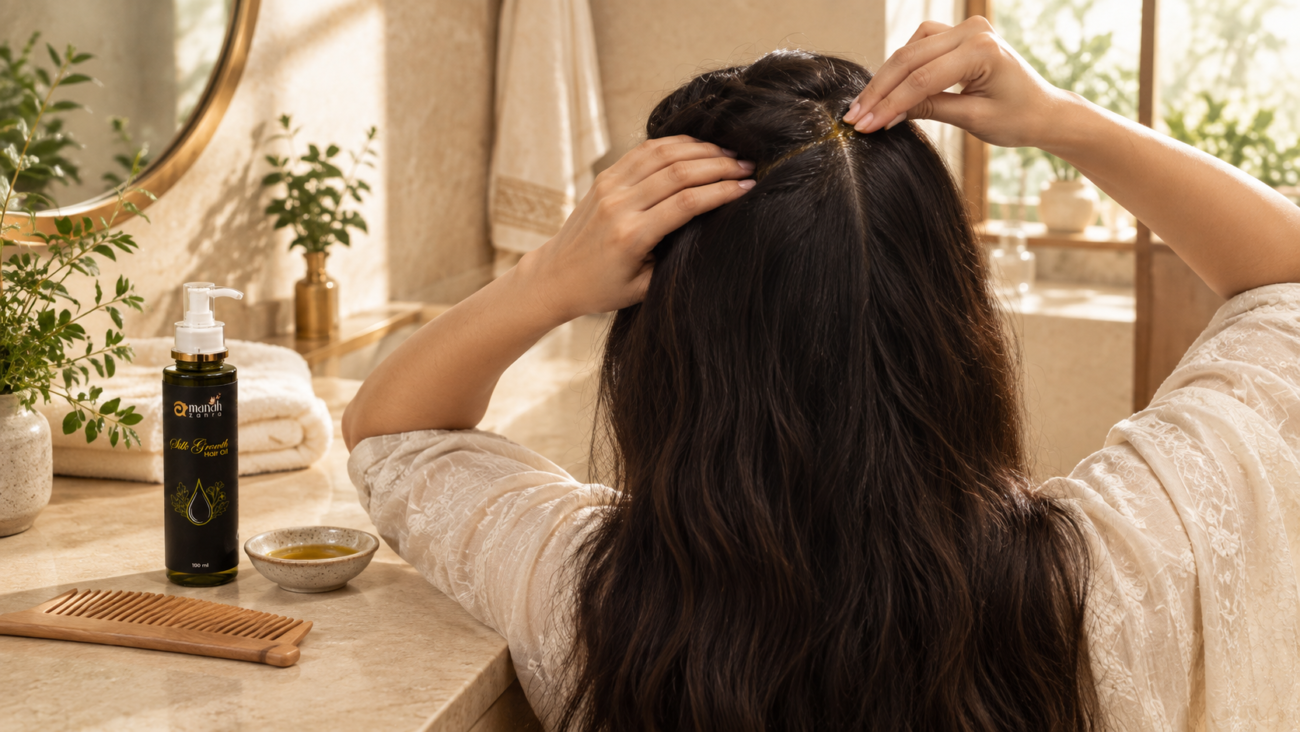
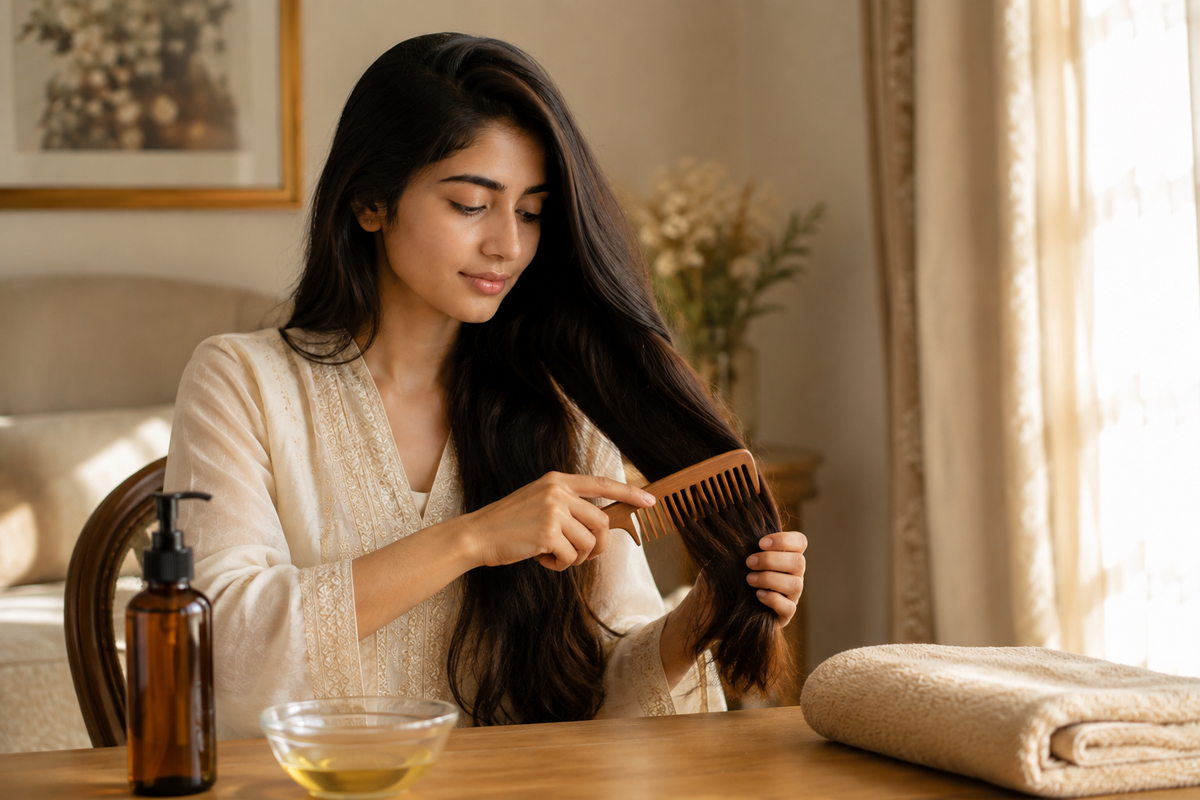
There is something deeply comforting about oiling your hair.
Additionally, for many women, it is more than another beauty step. It is the familiar ritual of sitting down, parting the hair, and applying a little oil through the strands.
As a guide on How to Oil Your Hair Properly, it also involves giving your scalp attention. This is the care your scalp has been asking for.
But here is the problem: many of us learned how to oil our hair without ever learning how to oil it properly.
We pour too much oil onto the scalp, massage aggressively, leave it overnight because we assume “longer is better,” wash it repeatedly until the hair feels stripped, and then wonder why our hair still feels dry, heavy, greasy, or difficult to manage.
The truth is that good hair care is rarely about using more product. It is about using the right amount, with the right technique, at the right frequency for your hair and scalp.
Hair oiling can be a useful part of a hair-care routine, particularly for hair that feels dry or rough. However, it is not a universal treatment for every type of hair loss or scalp condition. Dermatologists emphasize that hair health depends on factors including hair type, washing habits, heat exposure, styling practices, and the underlying cause of hair loss.
So, if you have been searching for how to oil your hair properly, this guide will walk you through the process from choosing your oil to washing it out—without unnecessary complications.
Why Is Hair Oiling Part of a Good Hair-Care Routine?
Hair can become dry, rough and more prone to breakage from frequent washing, heat styling, chemical treatments, environmental exposure and everyday friction.
An appropriate hair oil can help make the hair feel smoother and more conditioned. Some oils may also reduce the dry, rough feeling of the strands and improve shine.
Research on specific oils is more nuanced than many beauty claims suggest. For example, coconut oil has been studied for its ability to interact with the hair shaft and reduce protein loss, while clinical guidance emphasizes that different hair types respond differently to oiling.
That distinction matters.
Hair oiling is hair care—not a magic cure.
If you are experiencing sudden, severe or persistent hair loss, oiling alone should not be considered a treatment. Hair loss can have many causes, including hereditary factors, illness, hormonal changes and certain hairstyles or hair-care practices. Finding the cause is important before deciding what treatment you need.
With that understanding, let’s look at the proper hair oiling technique.
How to Oil Your Hair Properly
A good hair oiling routine does not need to be complicated. Think of it as seven simple steps.
Step 1 — Choose the Right Hair Oil
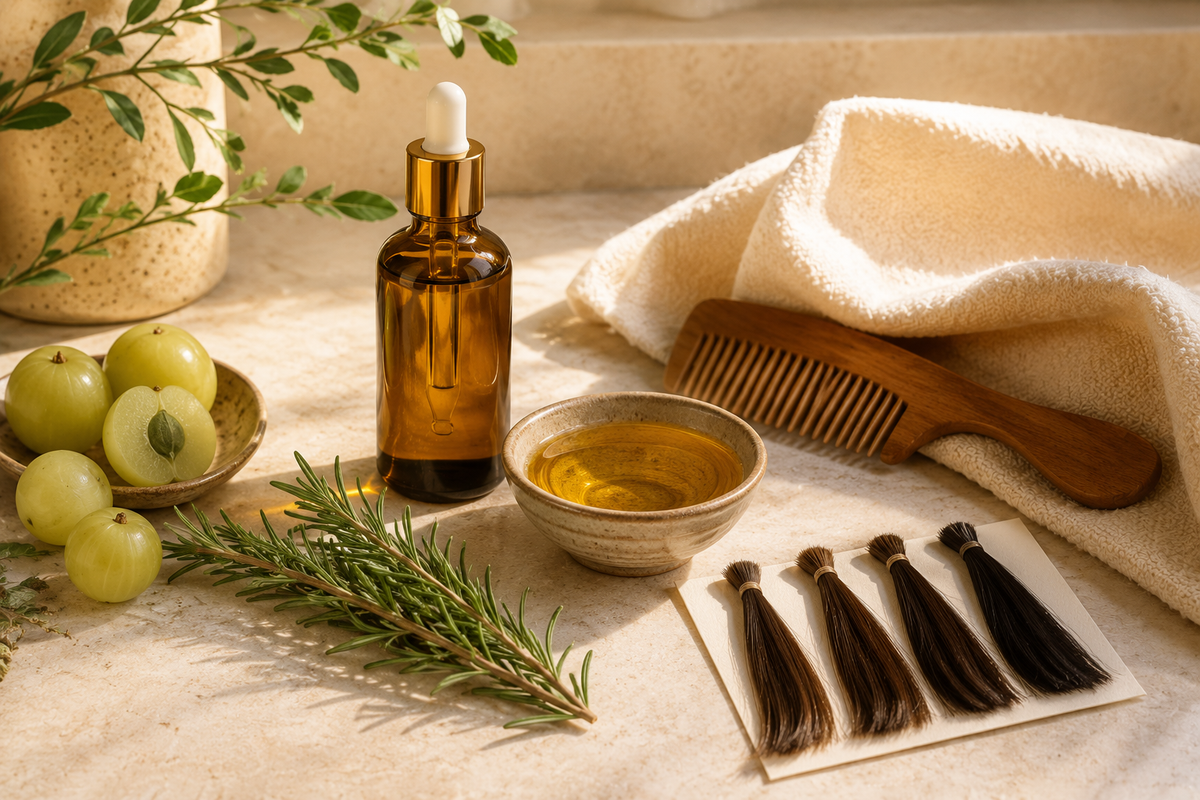
The best oil for your hair is not necessarily the most expensive one or the one trending on social media. How to Oil Your Hair Properly
Start by considering your hair.
If your strands are dry, coarse or prone to frizz, you may appreciate an oil that helps them feel softer and more manageable. If your hair is fine or naturally oily, using too much oil can leave it weighed down.
Cleveland Clinic notes that hair type matters when deciding whether oiling is suitable; people with dry, coarse or tightly curled hair may benefit more than people with fine, straight hair who can find oils too heavy.
Look at the ingredient list and choose a product formulated for the purpose you have in mind. Avoid assuming that a longer ingredient list automatically means better results.
For a simple routine, Amanah Zahra Silk Growth Hair Oil can be introduced as one option for women who want to make regular oiling part of their hair-care routine.
The important thing is consistency and suitability—not using excessive amounts.
Step 2 — Prepare Your Scalp and Hair
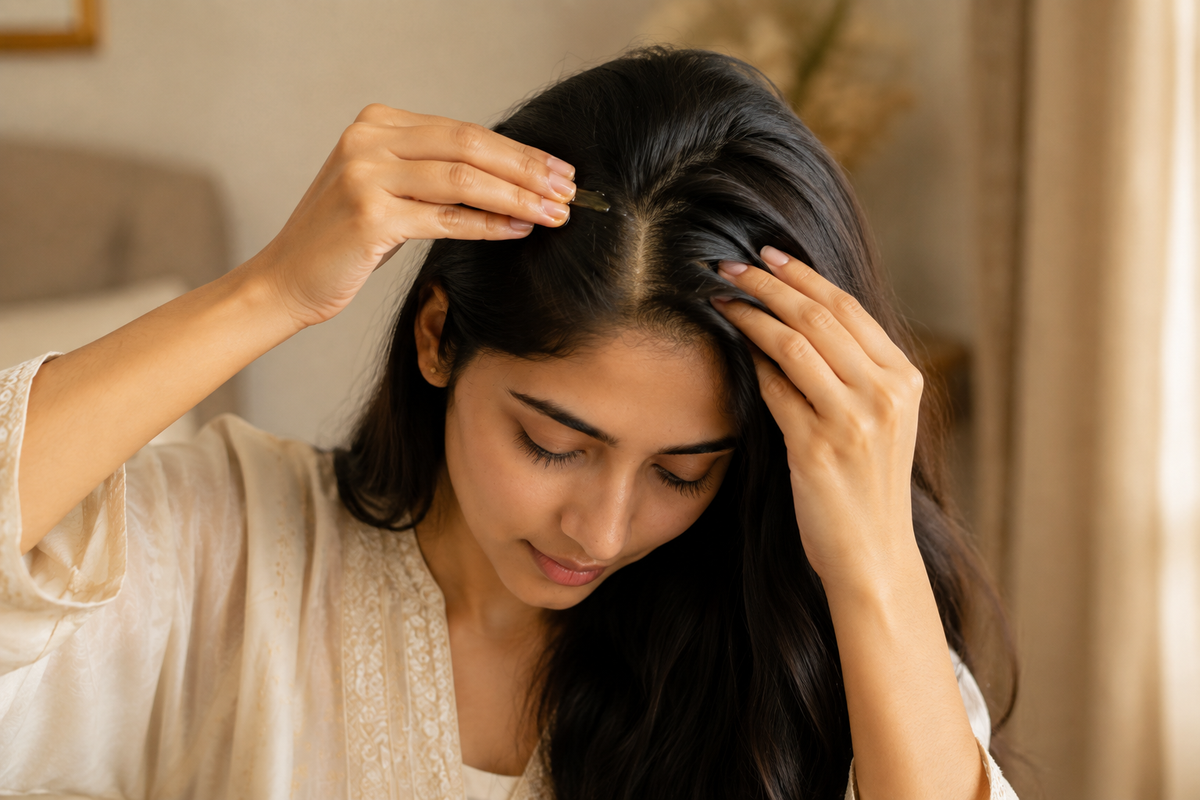
Before applying oil, gently detangle your hair.
If your hair is long, begin at the ends and gradually work upward rather than pulling a comb aggressively through knots.
You can oil dry hair, and you generally do not need to soak your hair in oil before starting. Cleveland Clinic recommends beginning with dry hair and using a small amount of oil.
This is also a good moment to look at your scalp.
If you have persistent itching, scaling, redness, sores or significant dandruff, don’t assume that adding more oil will solve the problem. Some scalp conditions can actually become worse with inappropriate products.
Step 3 — Apply Hair Oil to Your Scalp
This is where many women make their first mistake.
More oil does not mean more benefit.
Take a small amount and distribute it gradually rather than pouring a large quantity directly onto your scalp.
Part your hair into sections so you can apply the product evenly. You do not need to completely saturate the scalp.
And remember: scalp oiling is not appropriate for everyone. Cleveland Clinic specifically cautions that people prone to dandruff may want to avoid oiling the scalp because certain oils can aggravate scalp problems.
If your scalp becomes itchy, irritated, unusually greasy or develops more flakes after oiling, stop and reassess the routine.
Step 4 — Massage Gently
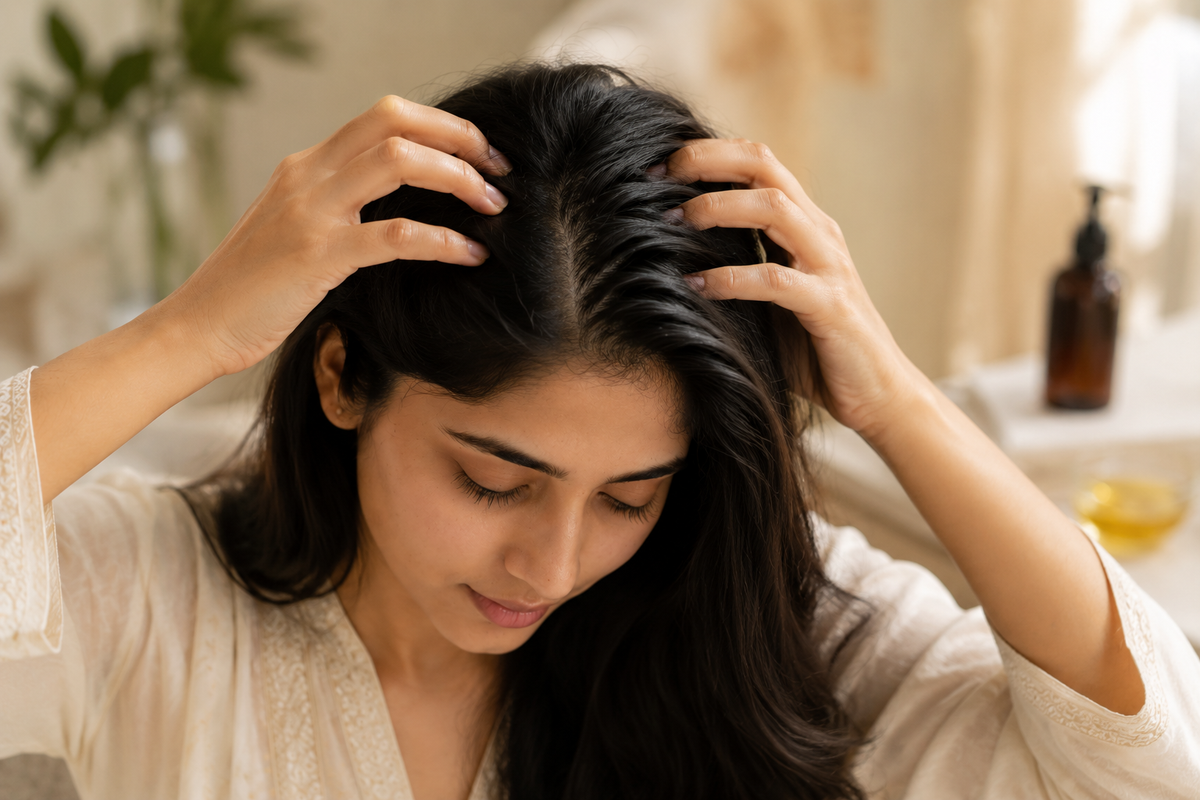
A hair oil massage should feel relaxing—not painful.
Use the pads of your fingertips, not your fingernails.
Move gently across the scalp rather than aggressively rubbing back and forth. There is no need to scratch, pull or massage hard enough to make the scalp sore.
The purpose is simply to distribute the product and make the routine comfortable.
Aggressive handling can work against your goal. Hair is delicate, particularly when it is wet, and dermatologists recommend gentle handling to minimize unnecessary breakage.
So when someone tells you that you need to massage harder for better results, don’t.
Gentle is enough.
Step 5 — Apply Oil to Your Hair Lengths
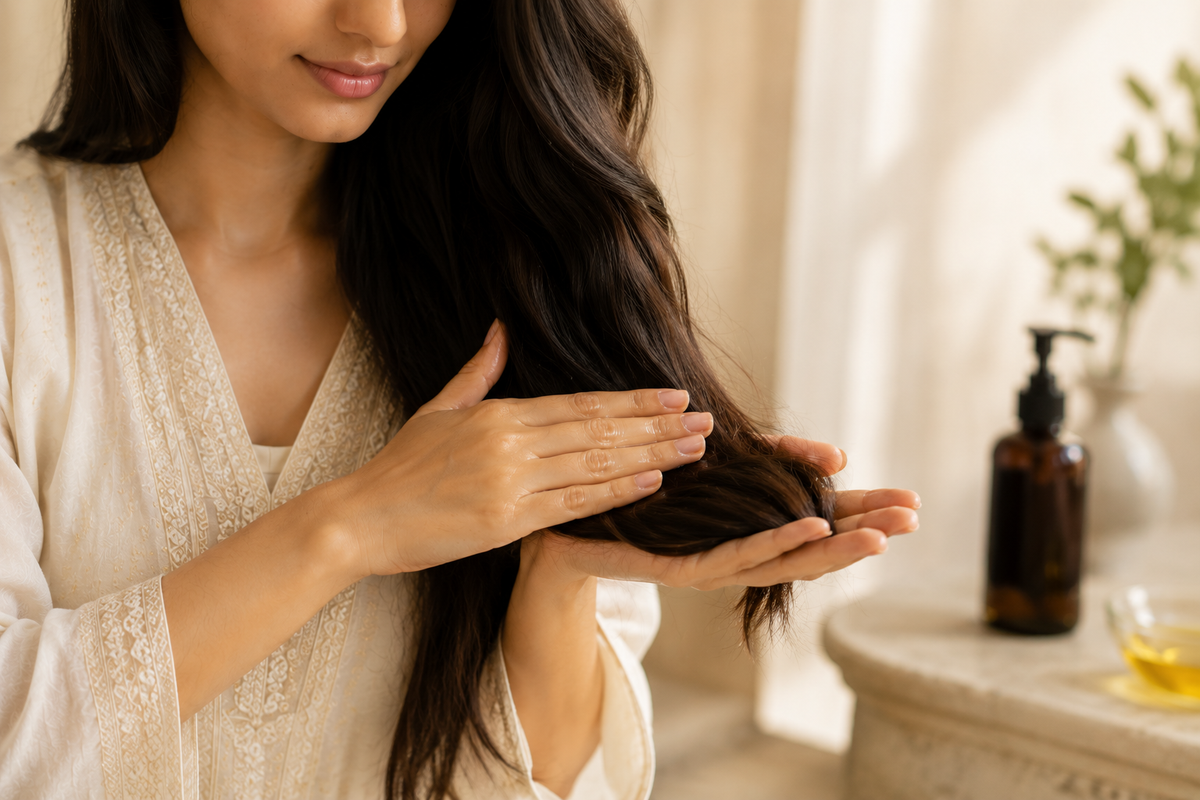
Do not forget the actual hair shaft.
If your lengths are dry, rough or frizzy, place a small amount of oil between your palms and gently smooth it over the mid-lengths and ends.
This is particularly useful if your ends are the driest part of your hair.
You do not need to coat every strand until it is dripping. A light, even application is usually enough.
Cleveland Clinic similarly recommends using a small amount and applying oil through the hair, particularly toward the ends.
And if your hair is fine, start with even less.
You can always add another small amount. Removing an excessive layer of oil later is much harder.
Step 6 — Leave the Oil on for an Appropriate Amount of Time
One of the most common questions women ask is:
“How long should I leave oil in my hair?”
There is no universal rule saying that hair oil must stay overnight.
In fact, longer is not automatically better.
Cleveland Clinic’s hair-oiling guidance describes a shorter period—around 20 minutes to an hour—as one reasonable approach for some people.
Your own hair and scalp should guide you.
If your hair feels comfortable after a shorter treatment, there is no need to turn it into an overnight ritual.
And if your scalp becomes itchy, uncomfortable or excessively greasy, wash the oil out rather than forcing yourself to keep it on longer.
Step 7 — Wash Your Hair Properly
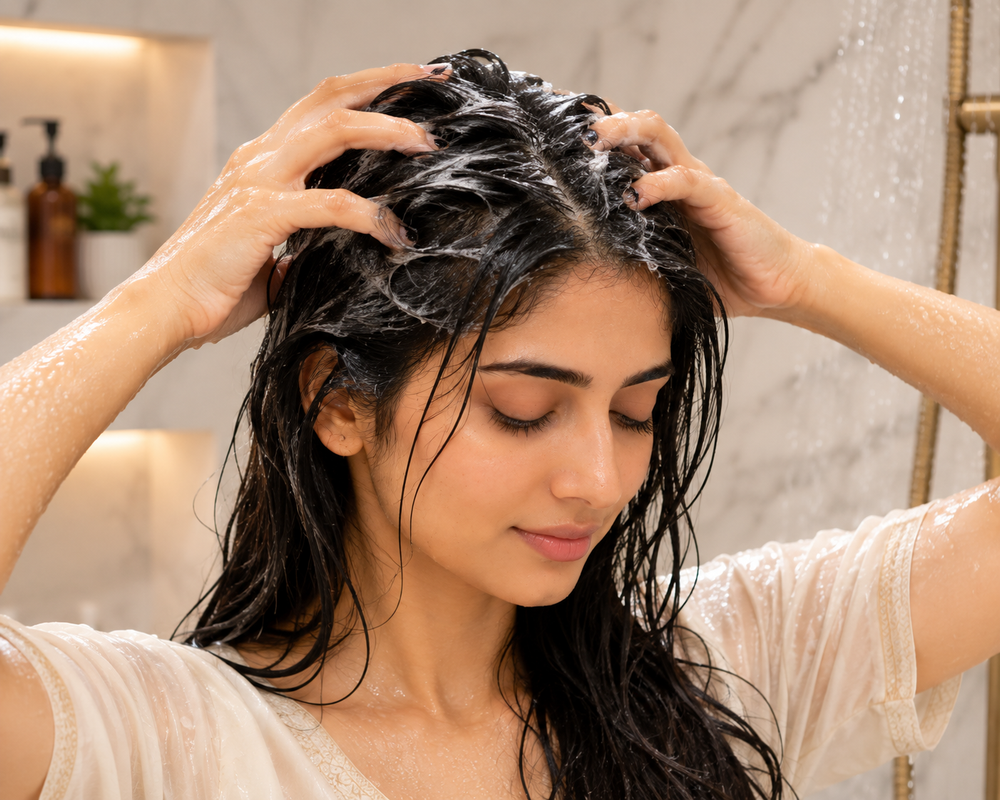
This step is often overlooked.
After oiling, wash your scalp thoroughly with shampoo. Focus the shampoo primarily on the scalp rather than aggressively scrubbing the entire length of your hair.
The American Academy of Dermatology recommends applying shampoo mainly to the scalp to remove accumulated oil, dead skin and product buildup while avoiding unnecessary drying of the hair lengths.
Follow with conditioner as appropriate for your hair type.
If you have applied too much oil, you may feel tempted to shampoo repeatedly. Instead, try using a reasonable amount of shampoo and washing carefully. Your goal is clean hair—not squeaky, stripped hair.
How Often Should You Oil Your Hair?
There is no single number that works for every woman.
Your ideal hair oiling routine depends on your hair texture, scalp condition, lifestyle and how your hair responds.
Someone with dry, coarse hair may find occasional oiling helpful, while someone with fine hair or an oily scalp may prefer much less.
Start conservatively.
For example, you might begin with once a week and observe how your hair and scalp respond. If your hair feels greasy or weighed down, reduce the amount or frequency. If your scalp becomes irritated or flaky, stop.
Remember that your overall hair-care routine matters more than forcing yourself to follow a particular oiling schedule.
The American Academy of Dermatology recommends washing based on how quickly your hair becomes dirty or oily rather than following one universal schedule.
How Long Should You Leave Hair Oil on Your Hair?
You do not need to leave oil on your hair overnight simply because someone on social media recommends it.
A shorter application can be enough for many people.
Start with approximately 20–60 minutes, particularly if you are new to oiling, and see how your hair responds. Cleveland Clinic provides a similar range in its practical hair-oiling guidance.
If your hair and scalp tolerate oil well, you can adjust your routine based on your experience.
The goal is not to see how long you can keep oil on your head.
The goal is to develop a routine that leaves your hair feeling comfortable, manageable and cared for.
Should You Oil Your Scalp or Hair Lengths?
This depends on what your hair actually needs.
For dry lengths:
Focus more attention on the mid-lengths and ends.
For a naturally oily scalp:
Use less product and be cautious about applying oil directly to the scalp.
For a scalp prone to dandruff or irritation:
Do not automatically assume oil will help. Some people can experience worsening symptoms with scalp oiling.
There is no prize for using the most oil.
Learn to observe your hair.
Common Hair-Oiling Mistakes to Avoid
Using too much oil
A completely saturated head does not necessarily mean a better treatment. Start small.
Scrubbing the scalp aggressively
Your scalp does not need a vigorous workout. Massage gently with your fingertips.
Leaving oil on overnight by default
Overnight oiling is not a requirement. A shorter treatment may be perfectly adequate.
Ignoring your scalp’s reaction
Itching, irritation or increased flaking is a reason to reconsider the product and technique.
Brushing aggressively
Especially after washing, handle your hair gently. The American Academy of Dermatology notes that wet hair is more vulnerable to breakage and recommends gentle detangling techniques.
Expecting oil to cure hair loss
This is perhaps the most important mistake.
Hair shedding and hair loss have many possible causes. Tight hairstyles, hereditary hair loss, illness and other factors can all contribute.
If you are losing significantly more hair than usual, developing visible thinning or experiencing persistent hair loss, consider speaking with a dermatologist rather than relying exclusively on cosmetic products.
Can Hair Oil Help With Dry and Brittle Hair?
It can be a useful part of a routine for some people, particularly when the main concern is dryness, roughness or manageability.
But healthy-looking hair requires more than oil.
Think about the entire routine:
- Use products suited to your hair type.
- Wash according to your scalp’s needs.
- Condition your hair after washing.
- Reduce excessive heat styling.
- Avoid unnecessarily tight hairstyles.
- Detangle gently.
- Avoid repeatedly putting your hair through damaging chemical or heat treatments.
The American Academy of Dermatology recommends limiting excessive heat and avoiding hairstyles that continuously pull on the hair because repeated tension can contribute to breakage and, in some cases, hair loss.
Oil can be one part of that picture—not the whole picture.
How to Choose a Hair Oil for Your Hair-Care Routine
When choosing the best way to oil hair, start with your own needs rather than someone else’s routine.
Ask yourself:
Is my hair dry or easily weighed down?
Is my scalp oily, dry, flaky or sensitive?
Do I mainly want smoother-looking lengths?
Am I dealing with breakage rather than hair loss?
Does the product have ingredients I am comfortable using regularly?
For women who enjoy a traditional oiling ritual and want a ready-to-use blend, Amanah Zahra Silk Growth Hair Oil can be incorporated into a simple weekly hair-care routine.
The key is to use it thoughtfully: a moderate amount, gentle application, appropriate contact time and proper washing afterward.
That is much more useful than believing that simply applying more oil will solve every hair concern.